
News
2025-12-01 13:27:00
Around 1000 young people in Armenia have participated in the youth research
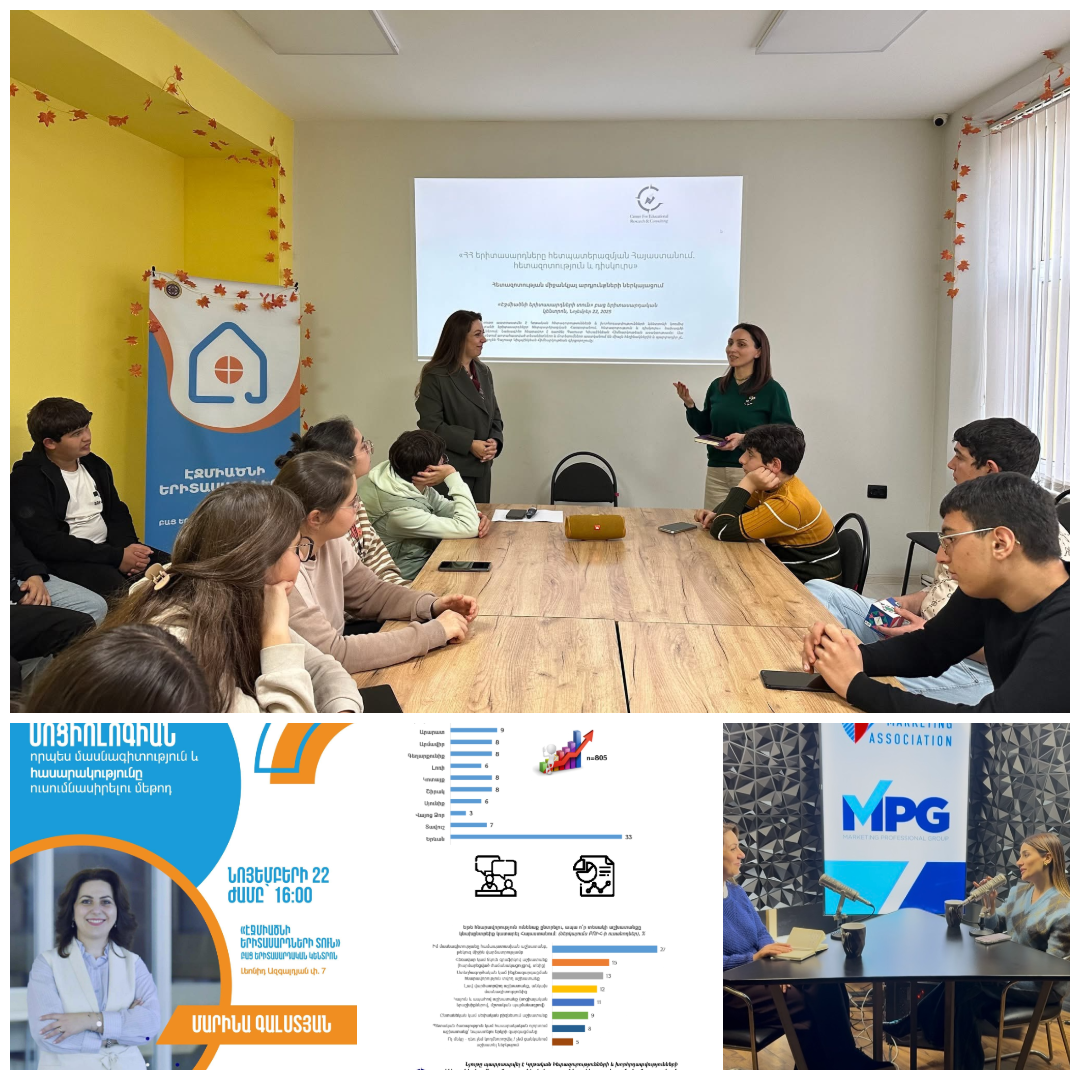
The fieldwork of the research within the framework of the project “Armenian Youth in Post-War Armenia: Research and Discourse” has been completed. Summarising the research activities, we note the following:
• Capacity building:
We delivered a series of training sessions for selected young researchers, covering youth research methodology, research methods and tools, and ethical standards. Meetings were also held with the supporting team.
• Research component:
More than 1,000 young people from various regions of Armenia and Yerevan participated in the online survey. We conducted 10 focus group discussions and 15 in-depth interviews, engaging around 85 young participants.
• Validation and dissemination of research findings:
Preliminary findings were presented at the “Ejmiatsin Youth House” Open Youth Centre during a meeting with local young people. Research insights were also shared on a radio programme. In addition, we held approximately 10 consultation meetings with representatives of local, state and civil society organisations, border communities, educational institutions, and the academic community.
• Media content development:
We continue to publish a series of infographics on the evolution of youth studies, conceptualisations of youth, methodological approaches, ethical standards, and thematic research directions. The series also includes interim results from the online survey.
We have now launched the data processing and analysis phase, during which quantitative and qualitative data will be analysed and integrated into the final research report.
We want to thank the young people who participated in the study, our partners, young researchers, and the support team for their trust, cooperation, and efforts.
A heartfelt thank you to the Calouste Gulbenkian Foundation for its support of this initiative and investment in the future of Armenian youth through evidence-based research and dialogue. The views, perspectives, and approaches expressed in this work are solely those of the authors and do not necessarily reflect the position of the Calouste Gulbenkian Foundation.
Back